Scripture Reading: 2 Samuel 22–23; Psalm 57
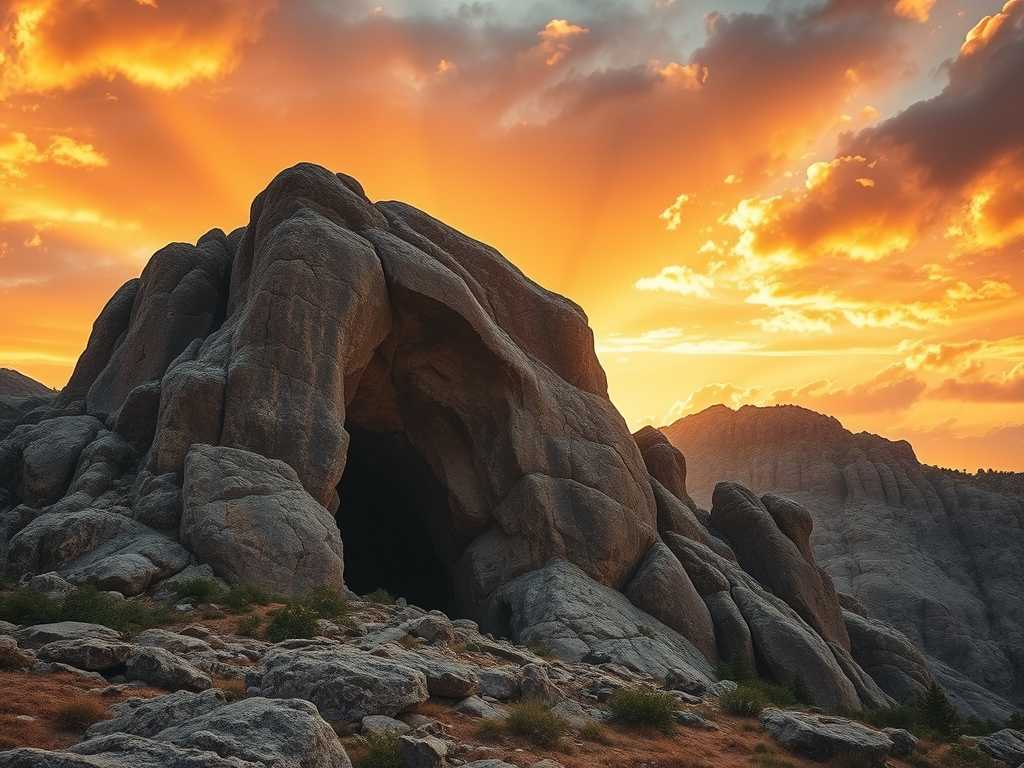
There are seasons when stability feels like a memory—when foundations tremble, voices falter, and familiar paths give way beneath our feet. In those moments, strength is not found in standing taller but in kneeling lower, and safety is not discovered in the absence of threat but in the presence of the God whose character does not shift. David’s song, his final words, and even his cave-born prayer all lead us to the same place: the Rock. Not a metaphor alone, but a Person. Not just where he hid—but who held him.
2 Samuel 22 – Refuge on the Rock
The battles were over, but David’s memory was not short, nor was his praise reluctant, for even as the crown rested on his head and the kingdom stood secure, he looked back—not to dwell in regret, but to recount the faithfulness of the God who had delivered him time and again. This song was not written in the comfort of success—it was forged through years of hiding, fighting, repenting, and rising, and now, as he lifted his voice, it rose not with shallow gratitude but with deep remembrance. “The Lord is my rock and my fortress and my deliverer; the God of my strength, in whom I will trust” (2 Samuel 22:2–3), David sang, not as a man who had escaped trouble, but as one who had encountered God in the midst of it.
He remembered every cry, every narrow escape, and every rescue that could only be explained by the hand of the Almighty, and with poetic reverence, he described how God “rode upon a cherub, and flew… and He was seen upon the wings of the wind” (2 Samuel 22:11), showing not only the magnitude of His intervention but the intimacy of His response. The earth shook when David prayed—not because David’s voice was powerful, but because God’s compassion was. When waters threatened and enemies closed in, God reached down and drew him out, for “He delivered me because He delighted in me” (2 Samuel 22:20), not because David was perfect, but because the covenant was unshaken.
As the psalm-turned-song unfolded, David wove together war and worship, judgment and mercy, discipline and defense, declaring that God had trained his hands for battle and had made his feet like the feet of a deer (2 Samuel 22:34–35), yet had also given him gentleness that made him great (2 Samuel 22:36). Every victory was reframed—not as David’s triumph, but as the Lord’s faithfulness. “The Lord lives! Blessed be my Rock! Let God be exalted, the Rock of my salvation!” (2 Samuel 22:47), he cried, not to conclude a career, but to glorify the One who had carried him through it.
For us, this song becomes more than history—it becomes a template for worship in every season, because the Rock David praised is still unshaken, and the strength he sang of is still available. Christ, our great Deliverer, has “become the chief cornerstone” (Ephesians 2:20), and in Him we find not only rescue, but rest. Whether we are standing on the other side of a battle or still in the middle of the storm, we are invited to remember, rejoice, and remain grounded—not in our resolve, but in the Rock who cannot be moved.
2 Samuel 23 – Anchored by the Rock
These were not the words of a dying king clinging to his legacy—they were the declarations of a servant who knew the Source of every victory, every decision, and every breath. David, now older and no longer on the battlefield, opened his mouth not to boast, but to bless, for he had lived long enough to know that crowns tarnish and kingdoms shift, yet the covenant of God remains unshakable. “The Spirit of the Lord spoke by me, and His word was on my tongue” (2 Samuel 23:2), he declared, not as a prophet among many, but as one who had been chosen to lead with justice under the authority of the Rock who had raised him from obscurity.
He described the righteous ruler not through political terms but through poetic imagery, comparing such leadership to “the light of the morning when the sun rises, a morning without clouds” (2 Samuel 23:4), for David had come to understand that the glory of leadership lies not in the grandeur of power, but in the consistency of light that points to Someone greater. Though his house had seen failure and sin, though betrayal and violence had pierced his own story, he clung not to his record but to the promise: “Yet He has made with me an everlasting covenant, ordered in all things and secure” (2 Samuel 23:5). That covenant, not his accomplishments, was his anchor.
The list that follows—David’s thirty mighty men—is not merely a record of war heroes; it is a catalog of loyalty, endurance, and courage born in the shadows of obscurity and forged in the fire of adversity. Josheb-Basshebeth, Eleazar, and Shammah stood their ground when others fled, not for applause but because something holy was worth protecting. Their deeds, remembered in detail, remind us that greatness in God’s kingdom is often measured not by titles held but by battles stood through. And when three of them risked their lives to bring David water from Bethlehem’s well, he refused to drink it, saying, “Shall I drink the blood of the men who went in jeopardy of their lives?” (2 Samuel 23:17), for he saw their sacrifice not as a token of loyalty to him, but as an offering that belonged to the Lord.
In this final chapter of reflection and remembrance, David’s heart points us forward—not to monuments or memoirs, but to the covenant-keeping God who anchors every life surrendered to Him. The strength of the mighty men did not lie in their skill alone, but in their allegiance to a king who was anchored in a Rock beyond himself. For us, this points to Christ—the King of kings—who not only calls us to follow Him but empowers us by His Spirit to stand, serve, and sacrifice as part of His kingdom. When we build our lives on that Rock, we do not fear fading seasons or shifting influence, for our worth is not in what we build, but in the covenant that holds us firm—“ordered in all things and secure” (2 Samuel 23:5).
Psalm 57 – Hiding in the Rock
This psalm was not written from a palace or temple, but from a cave—an enclosed space where the walls pressed in, and the threat outside still lingered. David was not yet delivered when he cried out; he was still hiding, still hunted, and still uncertain whether the next sound outside the entrance would bring rescue or betrayal. Yet even there, with fear still crouching and hope still dim, he began with these words: “Be merciful to me, O God, be merciful to me! For my soul trusts in You; and in the shadow of Your wings I will make my refuge, until these calamities have passed by” (Psalm 57:1). He did not ask for immediate escape—he asked for covering, and he declared his trust before the outcome was clear.
The enemies around him were fierce, described not vaguely but vividly—as lions, as beasts with teeth like spears, and tongues sharp as swords (Psalm 57:4), for David did not deny the danger; he simply refused to deny God’s presence. Though his soul was bowed down, his spirit remained anchored, and instead of turning inward in despair, he looked upward in praise. “I will praise You, O Lord, among the peoples; I will sing to You among the nations” (Psalm 57:9), he wrote, not after the cave but in the cave—because faith doesn’t wait for the battle to end before it begins to worship.
The refrain that runs through this psalm is not a cry of self-pity, but a declaration of God’s supremacy: “Be exalted, O God, above the heavens; let Your glory be above all the earth” (Psalm 57:5,11). Even in hiding, David knew that the Rock of refuge was not just shelter—it was a place where the glory of God could still be revealed. His enemies had dug a pit, yet it was they who would fall into it (Psalm 57:6), for the Lord is not bound by caves or threatened by weapons—He is the God who lifts, covers, and prevails.
In our own caves—those moments where we feel cornered, unseen, or uncertain—we are invited to do more than wait; we are invited to worship. Christ, who cried out in Gethsemane and triumphed from the tomb, meets us in every place of hiding, not to rush us out, but to remain with us until the storm passes. And even there, He reminds us that His mercy is not delayed, and His glory is not diminished. Like David, we may not be delivered yet, but we are not alone—and when we take refuge in the Rock, we can still sing.
Final Reflection
The Rock is not only the place where we stand—it is the Person in whom we trust. For David, the Rock was not a symbol of strength apart from God, but the living reality of His nearness, faithfulness, and covenant mercy in every chapter of life. In war, the Rock defended him; in leadership, the Rock established him; and in hiding, the Rock sheltered him. Whether David was lifting a sword, holding a crown, or whispering from a cave, his confidence was never in his own resilience, but in the steadfastness of God. He sang not because life had become easy, but because he had become anchored.
These chapters do not paint the portrait of a flawless king, but of a faithful God—One who makes covenants that cannot be broken, who raises the lowly and humbles the proud, who trains hands for battle and receives whispered songs from cave walls still damp with fear. And in each of these places, He reveals Himself as the Rock—not only for David, but for us. For in Christ, the Rock has not only come near—He has made Himself the cornerstone, the foundation upon which we build, rest, and rise again.
Prayer
Lord,
You are our Rock—sure in every storm, steady in every shifting season, and faithful in every hidden place. When we feel forgotten or overwhelmed, remind us that You are still near. Teach us to praise You not only after the breakthrough, but from within the cave. Anchor us in Your promises, and let Your covenant be the foundation beneath every choice, every surrender, and every song.
In Jesus’ name,
Amen.
Journaling Prompt
Think about the last season in your life when you felt pressed, uncertain, or hidden—was your instinct to fight, to flee, or to find refuge in God? As you read David’s words—sung after battle, spoken before death, and prayed from a cave—what part of his journey mirrors your own? Take a moment to write about where you’ve been building: have you been striving to stand on your own strength, or have you been resting on the Rock who never moves? Where do you need to be reminded that your identity, your future, and your legacy are secured not by outcomes, but by covenant?
Our Scripture reading schedule for the days ahead:
| Day | Date | Scripture Reading |
| Thursday | May 22 | Psalms 95, 97-99 |
| Friday | May 23 | 2 Samuel 24; 1 Chronicles 21-22; Psalms 30 |
| Saturday | May 24 | Psalms 108-110 |
| Sunday | May 25 | 1 Chronicles 23-25 |
In Christ,
Mrs. O 🤍

Leave a Reply