Scripture Reading: 1 Samuel 15-17
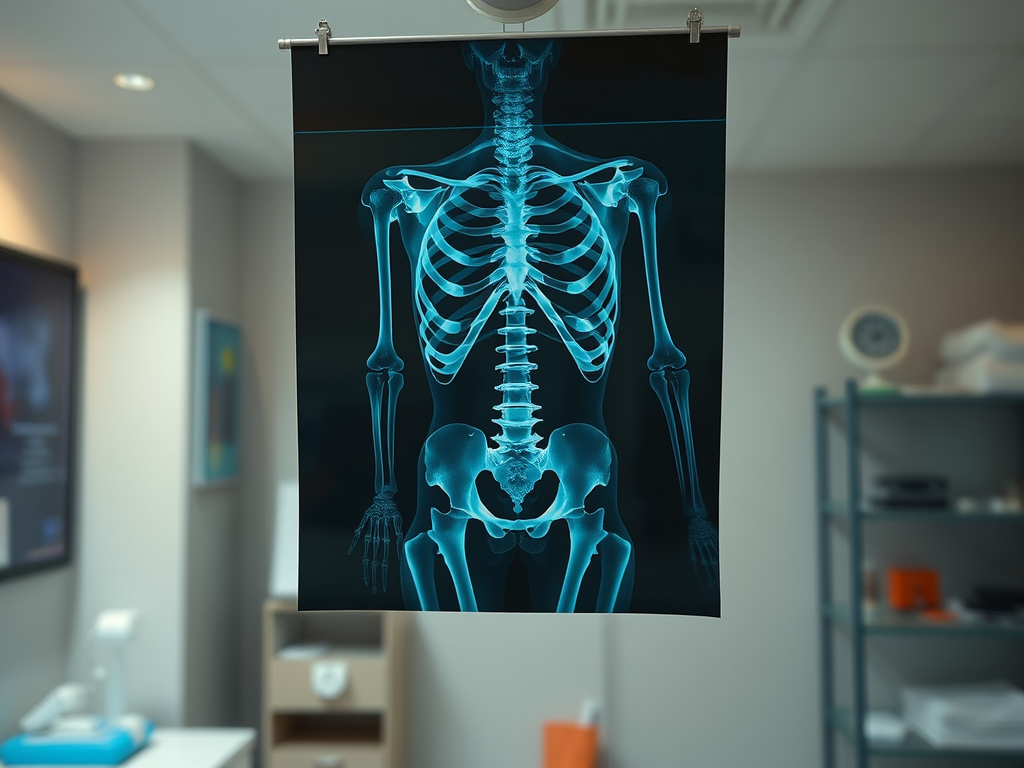
In medicine, an X-ray allows us to see what the naked eye cannot. It doesn’t just confirm what appears to be wrong—it reveals what is actually broken beneath the surface. From hairline fractures to hidden damage, X-rays are trusted because they help physicians diagnose the real issue, not just the symptoms. Without them, treatment is only guesswork.
In much the same way, the Word of God acts as a spiritual X-ray. It discerns what lies beneath our words, our actions, and even our obedience. What seems complete on the outside may still be fractured underneath. What looks impressive in public may be crumbling in private. But while human eyes tend to fixate on appearance, God always looks deeper. He examines motives, exposes compromises, and sees the kind of faith that the world often overlooks.
In 1 Samuel 15–17, we are shown three moments where God reveals what is beneath the surface. Saul obeys—almost. Jesse’s sons impress—but not all are chosen. A shepherd steps onto a battlefield with no armor, yet with more spiritual vision than an entire army. In each of these moments, God reveals that true strength, true calling, and true obedience are matters of the heart. And faith, when rightly placed, acts as a kind of X-ray—it gives us the ability to see what isn’t visible yet, to believe in what is not yet seen, and to act as though it already is!
Surface Obedience (1 Samuel 15)
God’s instructions to Saul were not vague. Through the prophet Samuel, the Lord commanded Saul to strike down the Amalekites, a people who had ambushed Israel during their journey out of Egypt and remained a symbol of defiance against God. This was not simply a military order—it was a divine judgment. God’s word was clear: “Devote to destruction all that they have. Do not spare them” (1 Samuel 15:3).
Saul gathered his forces and launched the campaign and from the outside, the battle looked like a success. The Amalekite cities fell, and Saul returned with a victory report. However, he had not fully obeyed. Though the army destroyed much, Saul spared King Agag, along with the best sheep, oxen, and livestock. His reasoning sounded spiritual—he claimed the animals were for sacrifice—but his actions exposed a heart that had chosen convenience over obedience.
When Samuel arrived, Saul greeted him with a confident declaration: “I have performed the commandment of the Lord”(1 Samuel 15:13). But Samuel, hearing the unmistakable sounds of livestock in the background, asked the piercing question: “What then is this bleating of the sheep in my ears?” (1 Samuel 15:14). The appearance of obedience quickly unraveled under the weight of truth.
God was not impressed with Saul’s partial obedience dressed in religious language. Through Samuel, He delivered a sobering reminder: “To obey is better than sacrifice, and to listen than the fat of rams” (1 Samuel 15:22). Obedience is not measured by what we preserve for spiritual optics but by how fully we submit to what God has said. Consequently, because Saul had rejected the word of the Lord, God rejected him as king.
Samuel, grieving the moment, carried out what Saul would not. He executed King Agag and walked away from Saul for the last time.
This chapter reminds us that obedience cannot be measured by appearances alone. There are moments when we may look obedient to others, even while withholding parts of our hearts from God. But God sees beneath the surface. He still longs for full surrender, not spiritual performance. And He still uses His Word to reveal the difference. “For the word of God is living and active… discerning the thoughts and intentions of the heart” (Hebrews 4:12). When we yield completely, we allow Him to mend the fractures we’ve been trying to hide.
Overlooking Appearance (1 Samuel 16)
Saul’s failure marked the beginning of a quiet search for a new king. God instructed Samuel to go to Bethlehem, to the house of Jesse, for there He had chosen a king from among Jesse’s sons. Samuel obeyed, though not without fear—after all, Saul was still on the throne, and a public anointing of another king could easily be seen as treason. But obedience led Samuel to Jesse’s home, where the first of Jesse’s sons, Eliab, stood tall and commanding in appearance.
As Samuel looked on Eliab, he assumed he had found the one. “Surely the Lord’s anointed is before Him,” he thought (1 Samuel 16:6). But God quickly corrected him: “Do not look on his appearance or on the height of his stature… for the Lord sees not as man sees: man looks on the outward appearance, but the Lord looks on the heart” (1 Samuel 16:7).
One by one, seven sons passed before Samuel. None were chosen. Only then did Jesse mention his youngest—David, who had been left behind tending the sheep. When David entered, ruddy and unassuming, God confirmed His choice: “Arise, anoint him, for this is he” (1 Samuel 16:12). And in that moment, the Spirit of the Lord rushed upon David.
However, David’s journey to kingship did not begin with a throne. Instead, it began with service. When Saul became tormented by a harmful spirit, David was called to play the harp in his court. The same young man anointed in secret now served quietly in the presence of the one he would one day replace.
This chapter reminds us that God does not choose based on credentials, charisma, or human strength. He chooses based on character and readiness of heart. While people are drawn to what impresses, God is drawn to what surrenders. “God chose what is low and despised in the world… so that no human being might boast in the presence of God” (1 Corinthians 1:28–29). And He often prepares us for influence through seasons of humble service, not public acclaim.
Faith as X-Ray Vision (1 Samuel 17)
When the next chapter opens, the scene shifts to a battlefield. The Philistines had gathered their army on one side of the Valley of Elah, while the Israelites camped on the other. For forty days, a towering warrior named Goliath of Gath stepped forward and mocked the armies of Israel. His armor glinted in the sun and his height dwarfed every soldier. His voice thundered a challenge: “Choose a man for yourselves, and let him come down to me… I defy the ranks of Israel this day” (1 Samuel 17:8–10).
No one moved. Even Saul, Israel’s king and tallest warrior, remained silent in his tent.
Meanwhile, back in Bethlehem, David had been sent by his father Jesse to bring food to his older brothers. When he arrived at the front lines and heard Goliath’s challenge, he was stunned—not just by the enemy’s arrogance, but by Israel’s fear. “Who is this uncircumcised Philistine, that he should defy the armies of the living God?” (1 Samuel 17:26).
Word of David’s confidence reached Saul, and David was summoned. Though still young and without battle experience, he offered to fight. He refused Saul’s armor, choosing instead his familiar sling and five smooth stones and with a heart anchored in the Lord’s power, he stepped onto the battlefield. “You come to me with a sword and with a spear and with a javelin, but I come to you in the name of the Lord of hosts” (1 Samuel 17:45).
What happened next shifted the tide of the entire war. One stone, slung with faith, struck Goliath in the forehead. The giant fell, the Philistines fled and Israel’s army surged forward in pursuit.
David didn’t see victory with natural eyes—he saw it through faith. His vision wasn’t limited by the size of the obstacle but expanded by his confidence in God. “Now faith is the assurance of things hoped for, the conviction of things not seen” (Hebrews 11:1). David had no evidence on paper that he could win but he believed in the God who had delivered him from lions and bears, and who would now deliver him from the hand of the giant.
Faith sees differently. It does not deny the battle, but it believes in the outcome God has promised and like an X-ray, it cuts through fear, past intimidation, and into truth.
Reflection
Throughout these chapters, God consistently looks beneath the surface. He is not moved by partial obedience, external appearances, or intimidating threats. He is drawn to the heart that trusts Him fully, responds with surrender, and walks forward in faith. Saul’s obedience was calculated, not complete. Jesse’s older sons looked the part, but lacked the heart. And David, though overlooked by men, was handpicked by God because he walked with vision others couldn’t see.
These passages invite us to pause and consider how we see—and how we respond. Are we walking in full obedience, or simply doing enough to appear faithful? Are we evaluating others—and even ourselves—based on surface-level impressions rather than spiritual substance? And when we face challenges that feel larger than us, are we measuring the threat through human eyes, or through the lens of faith?
God continues to call us to see as He sees. He is still looking for hearts that are fully surrendered, and He still delights to work through those who trust Him completely.
Prayer
Lord,
You are not limited by what we see. You know what lies beneath our motives, behind our decisions, and within our hearts. We ask You to help us live in full surrender, not surface obedience. Teach us to trust what You see, not what others expect. Give us the courage to walk by faith, to choose obedience when it costs us, and to see ourselves and others through the clarity of Your truth.
In Jesus’ name,
Amen.
Our Scripture reading schedule for the rest of the week:
| Day | Date | Scripture Reading |
| Sunday | April 13 | 1 Sam. 18–20; Ps. 11, 59 |
In Christ,
Mrs. O 🤍





Leave a Reply