Scripture Reading: 1 Samuel 1–3
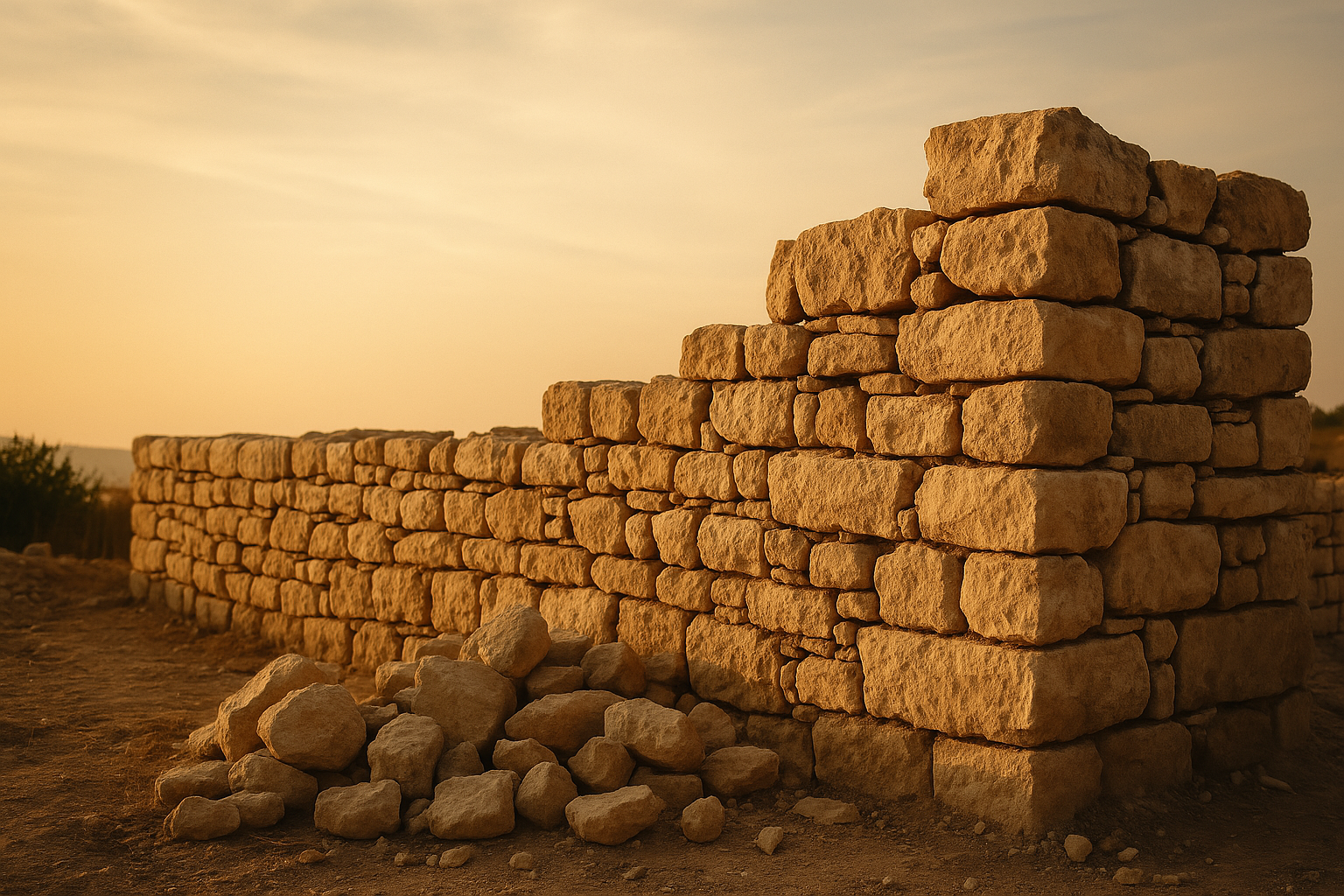
Faith is rarely built in sweeping moments. It comes together in layers—unseen, unhurried, yet entirely intentional. Like the quiet laying of bricks on early foundations, the Lord constructs trust in our lives one obedient step at a time. We want instant walls, finished sanctuaries, answers that rise like skyscrapers. But God, the Master Builder, begins beneath the surface. Before anyone sees the frame, He is already working in silence.
The opening chapters of 1 Samuel take us to the hill country of Ephraim, to a town called Ramathaim-Zophim—ancestral land belonging to Elkanah, a descendant of Zuph. This region not only bore prophetic promise but also legacy. Ramathaim was the hometown of Elimelech, Naomi’s husband, and father-in-law to Ruth. Redemption had already walked this soil. But now, God was laying new groundwork—not just for a family, but for a nation’s spiritual awakening.
In this sacred space, a barren woman would cry out. A neglected priesthood would falter. And a boy still in childhood would begin to hear the voice of God. If faith is built block by block, then this passage shows us how God lays the first stones—through prayer, praise, obedience, and calling.
Laying the Foundation (1 Samuel 1)
The story opens in ache. Elkanah, a man of heritage and discipline, regularly brings his family to Shiloh to worship. But within his household, there is unrest. His wife Hannah is barren. And though Elkanah loves her, the silence of her womb is magnified by the mocking voice of Peninnah, his other wife, who provokes her year after year (1 Samuel 1:6–7).
Barrenness, in Scripture, is rarely just biological. It’s symbolic—a place where hope appears to have dried up, and waiting becomes identity. And yet, this is the soil where God so often begins to build. Hannah doesn’t lash out in bitterness. She goes to the Lord. Her grief doesn’t paralyze her; it postures her. In the temple, she weeps and prays—not with rehearsed eloquence, but with a soul poured out. She makes a vow: if God gives her a son, she will give him back (1 Samuel 1:11).
This prayer becomes the foundation. Not just for Samuel, but for a shift in Israel’s spiritual direction. God responds—not immediately with the birth of a child, but with peace that settles her heart (1 Samuel 1:18). Soon, her womb opens, and Samuel is born—a name that means “Heard by God.”
In a world of self-promotion, Hannah’s surrender stands as holy defiance. She doesn’t cling to her answer; she consecrates it. Once the child is weaned, she brings him back to Shiloh. The very thing she prayed for, she offers. And in doing so, she teaches us that faith is built not by receiving alone, but by releasing what we treasure most back into the hands of the Giver. “Unless the Lord builds the house, those who build it labor in vain” (Psalm 127:1).
God was laying more than a foundation in Hannah’s life—He was anchoring a prophetic shift in Israel’s future. And it started with one woman’s willingness to pray through pain and let obedience speak louder than possession.
Building with Praise (1 Samuel 2)
Hannah’s song is not a soft hymn whispered in a corner. It is a bold declaration—a holy anthem rising from the dust of affliction. Her praise is not merely gratitude for a child—it is prophetic vision. “My heart exults in the Lord; my horn is exalted in the Lord” (1 Samuel 2:1). She has seen the hand of God, and now her voice becomes a vessel for what He is about to do.
Her song dismantles pride and exalts divine reversal: “The bows of the mighty are broken, but the feeble bind on strength” (v. 4); “The Lord kills and brings to life; He brings down to Sheol and raises up” (v. 6). These aren’t sentimental lines—they are Spirit-breathed truths that echo the very nature of God’s kingdom. Hannah’s praise looks ahead, declaring the pattern that would define the ministry of Christ. “He has brought down the mighty from their thrones and exalted those of humble estate” (Luke 1:52).
But in the same chapter, another structure is crumbling. Eli’s sons—Hophni and Phinehas—serve as priests, yet show no reverence for the sacred. They exploit their position, taking the choicest portions of the sacrifice and sleeping with women at the entrance of the tent of meeting (1 Samuel 2:12–17, 22). They are priests without fear, builders without foundation. And the Lord sends a word of warning: “I promised that your house… would minister before Me forever… but now the Lord declares: Far be it from Me! For those who honor Me I will honor” (1 Samuel 2:30).
Their story is a caution to every generation. When praise is absent, and honor to God is replaced by self-interest, spiritual structures rot from within. Hannah’s song built a prophetic altar. Eli’s sons tore down what they were entrusted to uphold.
God is still looking for worshippers who sing truth and live it. He is still tearing down corrupted platforms and raising up the humble. And He is still inviting us to build lives where praise is more than music—it’s the mortar of obedience, reverence, and truth. “Through Him then let us continually offer up a sacrifice of praise to God… the fruit of lips that acknowledge His name” (Hebrews 13:15).
Blocks of Calling (1 Samuel 3)
Samuel was still a boy when the Lord called him. He had been dedicated, dressed in a little ephod, ministering in the temple under Eli’s supervision. But it’s in the quiet night that the voice of the Lord breaks in. “Now Samuel did not yet know the Lord, and the word of the Lord had not yet been revealed to him” (1 Samuel 3:7). Still, when the call came, he answered.
At first, Samuel mistakes the voice for Eli’s. Three times he runs to the old priest, and three times Eli sends him back. But by the third interruption, Eli realizes the divine is speaking. “Go, lie down, and if He calls you, you shall say, ‘Speak, Lord, for Your servant hears’” (1 Samuel 3:9). And when Samuel obeys, something shifts—not just for him, but for Israel. God entrusts him with a message of judgment for Eli’s house—a hard word, but a necessary one.
Samuel’s “yes” in the dark becomes a cornerstone. From that day forward, he grows in stature and favor, and “the Lord let none of his words fall to the ground” (1 Samuel 3:19). He would become the prophet who anointed kings, who interceded for a nation, who heard God clearly when others only heard silence.
Faith is not built on charisma. It is built on consistent surrender—on recognizing God’s voice and responding when it comes. Samuel was young, inexperienced, and unsure. But he was willing. And God builds with the willing. Jesus later affirmed this kingdom pattern: “Unless you turn and become like children, you will never enter the kingdom of heaven”(Matthew 18:3).
The foundation was now laid. Praise had gone up. The call had been received. God was preparing a prophetic house. And through one family’s surrender, a nation would begin to rise again.
Reflection
Faith is not a rush job. It’s not assembled like scaffolding we can climb in our own strength. It is laid slowly—in prayer, in surrender, in prophetic praise, and in obedience to God’s voice. Hannah teaches us to start with tears and end with trust. Eli warns us not to neglect what we’ve been given. Samuel shows us that God still speaks—and that age, background, or proximity to power do not determine His calling. Willingness does.
And so the question comes: what are we building? Are we laying down prayers that surrender our desires? Are we offering praise that shapes our theology and births prophetic hope? Are we listening in the stillness for the voice of God—not just in the spectacular, but in the whispered call?
Because the Lord is still building. And He’s doing it in unexpected places.
Prayer
Master Builder,
You lay foundations where we see only rubble. You call forth legacy from barren places and speak truth through surrendered hearts. Like Hannah, teach us to weep and worship in the same breath. Like Samuel, open our ears to hear You—even when the world grows quiet. And like the stones of Your house, shape us into vessels that carry Your voice, Your vision, and Your glory.
Build in us what will last. Let our lives rise not in our own strength, but by the steady hand of Your grace. And when You speak, Lord, may we always say:
“Here I am. Speak, for Your servant is listening.”
In Jesus’ name,
Amen.
Our Scripture reading schedule for the rest of the week:
| Day | Date | Scripture Reading |
| Wednesday | April 09 | 1 Sam. 4–8 |
| Thursday | April 10 | 1 Sam. 9–12 |
| Friday | April 11 | 1 Sam. 13–14 |
| Saturday | April 12 | 1 Sam. 15–17 |
| Sunday | April 13 | 1 Sam. 18–20; Ps. 11, 59 |
In Christ,
Mrs. O 🤍




Leave a Reply