Scripture Reading: Ruth 1-4
We often expect God to move within familiar borders—through the faithful, the strong, the clearly chosen. We look for His hand in the places that seem spiritually pristine or culturally appropriate. But the story of Ruth reminds us that heaven’s pen often scribes redemption where no one thought it could be written. When the house of bread runs dry, when the family line fails, when the road home is filled with shame and silence—this is where God begins to move.
Ruth’s story is a sacred disruption. It unfolds in the margins—among widows, in foreign fields, through legal customs and midnight gestures that seem too fragile to matter. But God, whose thoughts are higher than ours and whose ways confound human logic (Isaiah 55:8–9), chooses the unlikely to display the unshakable. He allows famine to lead His people back. He allows emptiness to make room for fullness. And He allows a Moabite woman, of no worldly significance, to carry the seed of a royal lineage.
For everyone who has felt overlooked, disqualified, or too far gone, Ruth’s story quietly rises like the barley in spring. It speaks of a God who sees, who redeems, and who writes unexpected endings for those willing to walk with Him—even when the path winds through loss. The story begins with scarcity, but it ends with legacy. Not because the characters were remarkable—but because God’s grace is.
This is not merely Ruth’s story. It is the story of Christ’s kingdom, unfolding through every willing heart. And it begins, as all great redemptive stories do, in the least expected place.
The House of Bread Goes Hungry (Ruth 1)
The story of Ruth begins not in comfort, but in contradiction. The opening lines place us in Bethlehem—the house of bread—during a time when the very thing it was known for could no longer be found. Famine had descended, and with it, a sense of confusion and spiritual disorientation. A land once flowing with promise was now dry, and Elimelech, with his wife Naomi and their two sons, left the covenant soil of Judah and entered Moab, a place known for idolatry, compromise, and a legacy birthed in scandal (Genesis 19:36–37).
What was meant to be a temporary detour for survival soon became the ground of devastation. Elimelech died. The two sons, who had taken Moabite wives—Orpah and Ruth—followed him to the grave. And Naomi, once full, now stood emptied of everything that had once defined her: husband, sons, security, legacy. “The hand of the Lord has gone out against me,” she declared (Ruth 1:13), her voice cracked by grief, her hope unraveled by sorrow. When she finally made her way back to Bethlehem, the city stirred at her return, but she silenced their welcome: “Do not call me Naomi… call me Mara, for the Almighty has dealt very bitterly with me” (Ruth 1:20).
Yet even as Naomi lamented what she had lost, God was quietly revealing what she had not. Walking beside her was Ruth—a woman whose presence no one would have predicted, and whose vow would reshape redemptive history. “Where you go, I will go… your people shall be my people, and your God my God” (Ruth 1:16). Spoken not under duress but in devotion, these words were more than familial loyalty; they were a declaration of faith. In that moment, Ruth stepped into covenant—not only with Naomi but with the God of Israel.
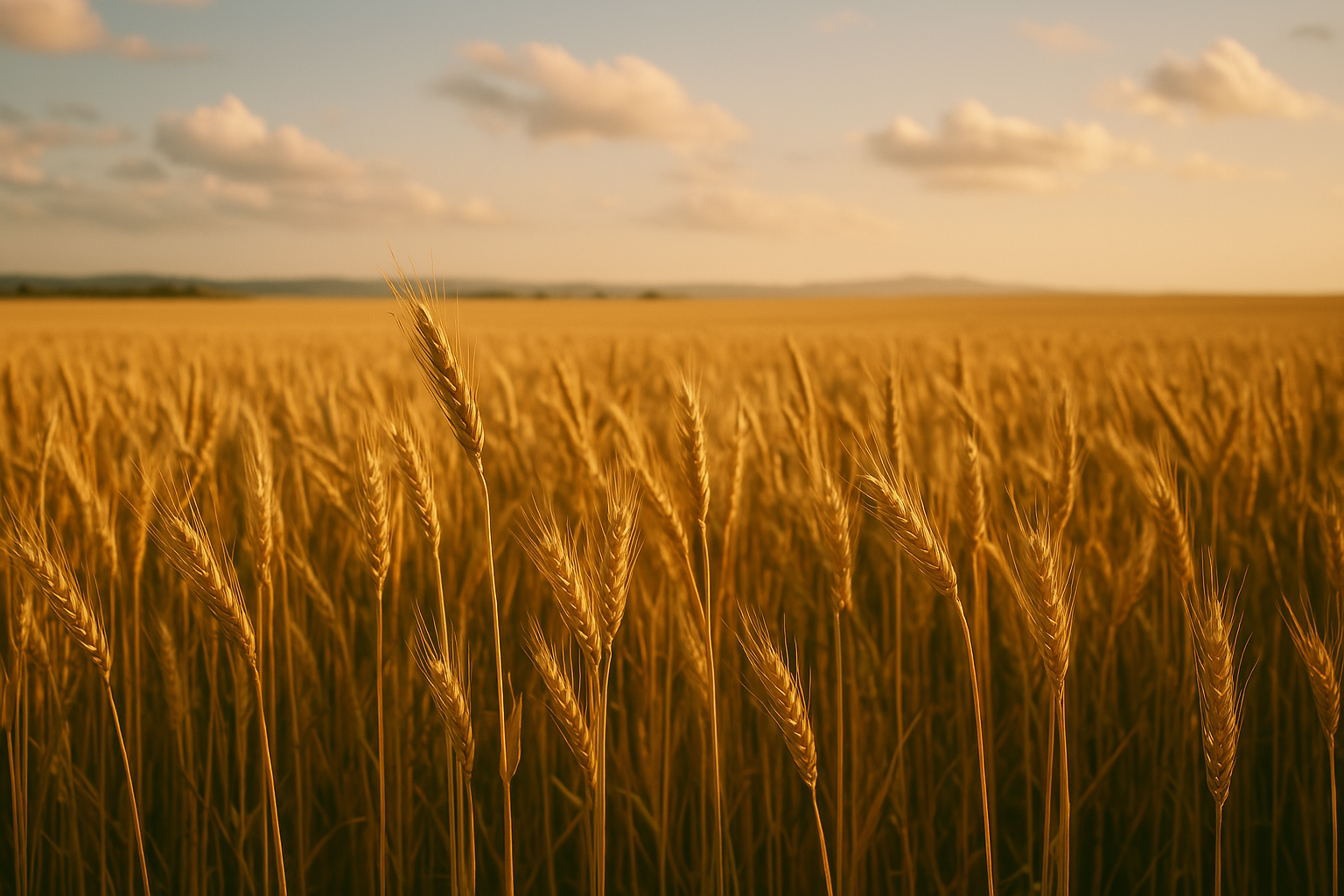
This was unexpected on every level. Ruth, a Moabite, belonged to a nation excluded from the assembly of the Lord (Deuteronomy 23:3). She had no inheritance, no claim, no promise to stand on. And yet, it is her voice that rises in the narrative—a voice of surrender, of faith, of spiritual rebirth. What Naomi believed to be the end of her story was, in truth, only the threshold of redemption. Though she returned bitter and broken, she arrived at the beginning of barley harvest (Ruth 1:22). The timing was not incidental—it was prophetic. The famine was lifting. Provision was stirring. The God Naomi feared had turned against her was already setting grace in motion through the woman no one expected Him to use.
And even now, God works in the same unexpected ways. He meets us in our famines. He draws near through people we would have never chosen. He reorders our lives through losses we never wanted. And He writes resurrection into chapters we assumed were final. The apostle Paul reminds us that “God chose what is low and despised in the world… so that no human being might boast in the presence of God” (1 Corinthians 1:28–29). Ruth’s presence in Bethlehem wasn’t a detail in Naomi’s story—it was the divine interruption that would carry the seed of redemption forward.
Unexpected Favor (Ruth 2)
If Ruth 1 closes in quiet despair, Ruth 2 opens in humble determination. With Naomi too worn by grief to rise, Ruth steps out into Bethlehem’s fields—not with entitlement, but with the heart of a servant. There is no fanfare as she sets out. Only a simple request: “Let me go to the field and glean among the ears of grain after him in whose sight I shall find favor” (Ruth 2:2). She had no idea where she would end up, but grace was already guiding her steps. What looked like a random field was, in fact, a prepared place.
The narrator gives us the key to this moment with deliberate irony: “She happened to come to the part of the field belonging to Boaz…” (Ruth 2:3). She happened. That word brushes lightly across the page, but it lands with sovereign weight. Nothing about Ruth’s journey was accidental. Her footsteps were led by the One who appoints times and boundaries (Acts 17:26). She walked into the inheritance field of a man named Boaz—a man of standing, a man of honor, and, unknown to Ruth, a man with the legal ability to redeem her story.
Boaz noticed her. But not because of beauty or status. He had heard of her sacrifice—how she had left her homeland, her people, and her gods to align herself with Naomi and the God of Israel. “May the Lord repay you for what you have done,” he said, “and a full reward be given you by the Lord, the God of Israel, under whose wings you have come to take refuge” (Ruth 2:12). It was more than a blessing—it was a benediction over a life that had chosen to believe in a God she could not yet see.
And from that moment, Boaz extended kindness that broke every social barrier. He invited her to eat with the workers. He instructed his men to treat her with respect. He commanded them to leave behind extra grain. Ruth gathered until her arms were heavy with provision—and her heart, with wonder.
When she returned home, Naomi—still clothed in the ashes of her grief—saw the evidence of divine favor. And suddenly, the silence of despair began to lift. “May he be blessed by the Lord, whose kindness has not forsaken the living or the dead!” Naomi cried (Ruth 2:20). For the first time since Moab, her words held light. Hope was no longer theoretical. It had substance. It had a name.
In this chapter, God’s hand is everywhere, yet never loudly announced. He does not part seas or shake mountains. He simply guides a willing woman to a field, places her in the path of a man of integrity, and reawakens a broken heart to the nearness of His mercy. This is how redemption so often begins—not in grand gestures, but in providential pathways and unexplainable favor. The field Ruth “happened” upon was a divine appointment. And the same God who guided her steps still guides ours today. “For we are His workmanship, created in Christ Jesus for good works, which God prepared beforehand, that we should walk in them” (Ephesians 2:10).
What looked like gleaning for survival became a glimpse of covenant. What seemed like a hard day’s labor became the beginning of legacy. And what began as a story of famine was now ripening into one of fulfillment.
A Midnight Request (Ruth 3)
The threshing floor was not a setting for romance. It was a place of sifting—a space where grain was separated from chaff, where harvest met its refining. Yet it is precisely here, in a space marked by labor and dust, that Ruth’s next chapter unfolds. Not because she sought a shortcut to security, but because obedience had led her to a threshold where faith must act with humility and boldness in equal measure.
Naomi, having discerned both timing and opportunity, gently nudged Ruth toward the next step. Boaz was a redeemer, a man who could restore what had been lost. But covenant redemption could not be forced—it had to be invited. Ruth would need to approach him with both reverence and vulnerability. “Wash yourself therefore, and anoint yourself, and put on your cloak… then go to the threshing floor” (Ruth 3:3). These were not instructions for manipulation; they were a call to readiness. Not simply physical preparation, but a symbolic laying aside of widowhood—a sign that Ruth was stepping out of mourning into expectation.
When Ruth arrived and lay quietly at Boaz’s feet, she enacted an ancient gesture of dependence—uncovering his feet and waiting in silence for his response. Her request, spoken with poise and profound spiritual insight, pierced the stillness of night: “Spread your wings over your servant, for you are a redeemer” (Ruth 3:9). This wasn’t flirtation; it was covenant language. Ruth was invoking the very imagery Boaz himself had used in chapter 2 when he blessed her for seeking refuge under the wings of the God of Israel (Ruth 2:12). Now she was asking Boaz to be the vessel of that refuge—to become God’s covering in flesh and blood.
Boaz’s reply was immediate and filled with honor. He did not shame her for crossing cultural lines or for making such a request in the vulnerable hours of night. Instead, he praised her kindness and integrity, noting that she had not pursued younger men, whether rich or poor. More than that, he acknowledged her request to be both legitimate and blessed. Yet even in his willingness, Boaz revealed an obstacle: another redeemer existed, one closer in lineage. The matter would have to be settled in the morning.
Still, before Ruth departed, Boaz filled her shawl with six measures of barley—a symbolic pledge that he would not rest until the matter was resolved. Naomi, upon receiving both the grain and the report, said what every waiting heart must eventually come to know: “Wait, my daughter, until you learn how the matter turns out, for the man will not rest but will settle the matter today” (Ruth 3:18).
In this chapter of hushed footsteps and midnight requests, we are reminded of the tender power of surrender. Ruth placed herself at the feet of the redeemer—not in presumption, but in trust. And isn’t this the posture of every believer before Christ? We come not with leverage, but with longing. We approach not in strength, but in need. And what we find is not rejection, but welcome. Jesus, our greater Boaz, has said, “Whoever comes to Me I will never cast out” (John 6:37). Like Ruth, we kneel in the dark with empty hands, only to rise bearing the weight of grace.
An Unexpected Door (Ruth 4)
What began with famine in the house of bread now moves toward a resolution no one in Bethlehem could have scripted. Boaz, true to his word, wasted no time. At the gate of the city—the place of legal transactions and community witness—he confronted the final barrier to redemption. The nearer kinsman was presented with the opportunity to redeem Naomi’s land. At first, he agreed. But when he learned that Ruth the Moabitess came with the land—that redemption required not only property, but people—he withdrew.
He could not see what Boaz did. He saw Ruth as a liability while Boaz saw her as a legacy.
With the nearer redeemer out of the way, Boaz stood before the elders and declared, “I have bought from the hand of Naomi all that belonged to Elimelech… also Ruth the Moabite, the widow of Mahlon, I have bought to be my wife” (Ruth 4:9–10). In that one proclamation, shame was removed, lineage was restored, and a new covenant was established. Ruth, the outsider from Moab, was now the redeemed bride, woven into the heart of Israel’s inheritance.
The people of the city rejoiced, pronouncing blessing and legacy over the union. But the greatest surprise was still to come. From this union came a child—Obed. And in an act of divine poetry, the baby was laid not only in Ruth’s arms, but in Naomi’s. “Then the women said to Naomi, ‘Blessed be the Lord, who has not left you this day without a redeemer… He shall be to you a restorer of life and a nourisher of your old age’” (Ruth 4:14–15). The same woman who had once renamed herself Mara, claiming the Lord had dealt bitterly with her, was now holding evidence of His mercy and faithfulness.
Obed would become the father of Jesse. Jesse would become the father of David. And through David, centuries later, would come Jesus—the Messiah, born of a woman, born under the law, to redeem those under the law (Galatians 4:4–5). In the quiet fields of Bethlehem, a lineage had begun that would one day split history and bring salvation to the world.
The inclusion of Ruth in this royal line was more than a personal redemption—it was prophetic. She was not only a foreigner grafted into Israel; she was a foreshadowing of the Gentiles being grafted into Christ. “Remember that you were at that time separated from Christ… alienated from the commonwealth of Israel… but now in Christ Jesus you who once were far off have been brought near by the blood of Christ” (Ephesians 2:12–13).
What man dismissed, God elevated. What tradition resisted, grace fulfilled. The story of Ruth closes not with a conventional ending, but with a future that none could have imagined. The famine had led to fullness. The widow had become the mother of a king’s lineage. The outsider was now an essential part of the story of Christ.
So it is with us. We, too, are the unexpected ones—brought near by mercy, written into the promises we could never earn. Our Redeemer did not rest until the matter was settled. And now, like Ruth, we carry His name, His legacy, and His love into a world still hungry for hope.
Reflection
Everything about Ruth’s story reminds us that God does not follow our patterns. He is not limited by our categories of what is useful, holy, or qualified. He writes beauty through barrenness, hope through hardship, and redemption through the unlikely. In Ruth, we find a mirror. We, too, were outsiders, brought near by mercy. We, too, stood in fields we did not earn, hoping for favor we did not deserve. And we, too, were noticed, welcomed, and covered by a Redeemer who didn’t just offer provision—but His very name.
Prayer
Redeemer and Restorer,
Thank You for being the God of the unexpected—the One who moves in famine, speaks through foreigners, and writes glory through our grief. Thank You for seeing us in the fields of our need and for covering us with Your grace. Like Ruth, we come with nothing to offer but trust. Like Naomi, we bring our bitterness and brokenness, praying You’ll make something beautiful of it all. And like Boaz, may we become vessels of Your mercy in a world hungry for hope.
Let our lives tell stories of redemption that point to You. Let our ordinary days be filled with divine surprises. And let our faith hold fast when we cannot see the end of the story, trusting that You are writing more than we could ever ask or imagine.
In Jesus’ name,
Amen.
Our Scripture reading schedule for the rest of the week:
| Day | Date | Scripture Reading |
| Tuesday | April 08 | 1 Sam. 1–3 |
| Wednesday | April 09 | 1 Sam. 4–8 |
| Thursday | April 10 | 1 Sam. 9–12 |
| Friday | April 11 | 1 Sam. 13–14 |
| Saturday | April 12 | 1 Sam. 15–17 |
| Sunday | April 13 | 1 Sam. 18–20; Ps. 11, 59 |
In Christ,
Mrs. O 🤍


Leave a Reply