
Scripture Reading: Judges 16-18
There’s more than one way to go blind. Sometimes it happens in an instant—through crisis, heartbreak, or loss. But more often, it comes slowly. Not through the absence of light, but through the fading of attention. A gradual drift away from what we know is true, until suddenly, the things that once felt clear are covered in shadow.
That’s the kind of blindness we encounter in Judges 16–18. It doesn’t always look dramatic. It often shows up in ordinary places—relationships, household decisions, and quiet shifts in worship. In these chapters, we meet people who began with calling and conviction, yet somewhere along the way, lost their sight.
Blind to Deception (Judges 16)
By the time we reach Judges 16, Samson’s story has begun to shift. He is no longer the young judge moving in fearless confidence, but a man whose strength remains while his spiritual clarity steadily fades. His downfall doesn’t come in a single moment. It builds slowly—through repeated compromises, unchecked desires, and growing ease in the company of the enemy.
In Gaza, he spends the night with a prostitute. Later, he falls in love with Delilah in the Valley of Sorek—a region deep within Philistine territory. The rulers approach Delilah with a bribe: uncover the secret of Samson’s strength, and she will be richly rewarded. She agrees, and the trap is set!
Delilah begins pressing for answers, gently but persistently. Samson toys with her—offering false explanations, allowing her to test him, and escaping each time. But he never leaves. He remains in the tension, choosing proximity over discernment. Though the threat is growing, he stays. And over time, the line between intimacy and entrapment quietly fades.
Eventually, Delilah wears him down. Scripture says his soul was “vexed to death” (Judges 16:16), and in a moment of exhaustion, he reveals the truth—his Nazirite vow, his uncut hair, and the consecration that marked his life from the beginning. That night, while he sleeps, she shaves his head and the Spirit of the Lord departs. When he wakes to fight, he doesn’t realize his strength is gone and the Philistines seize him, gouge out his eyes, and lead him away in bronze shackles.
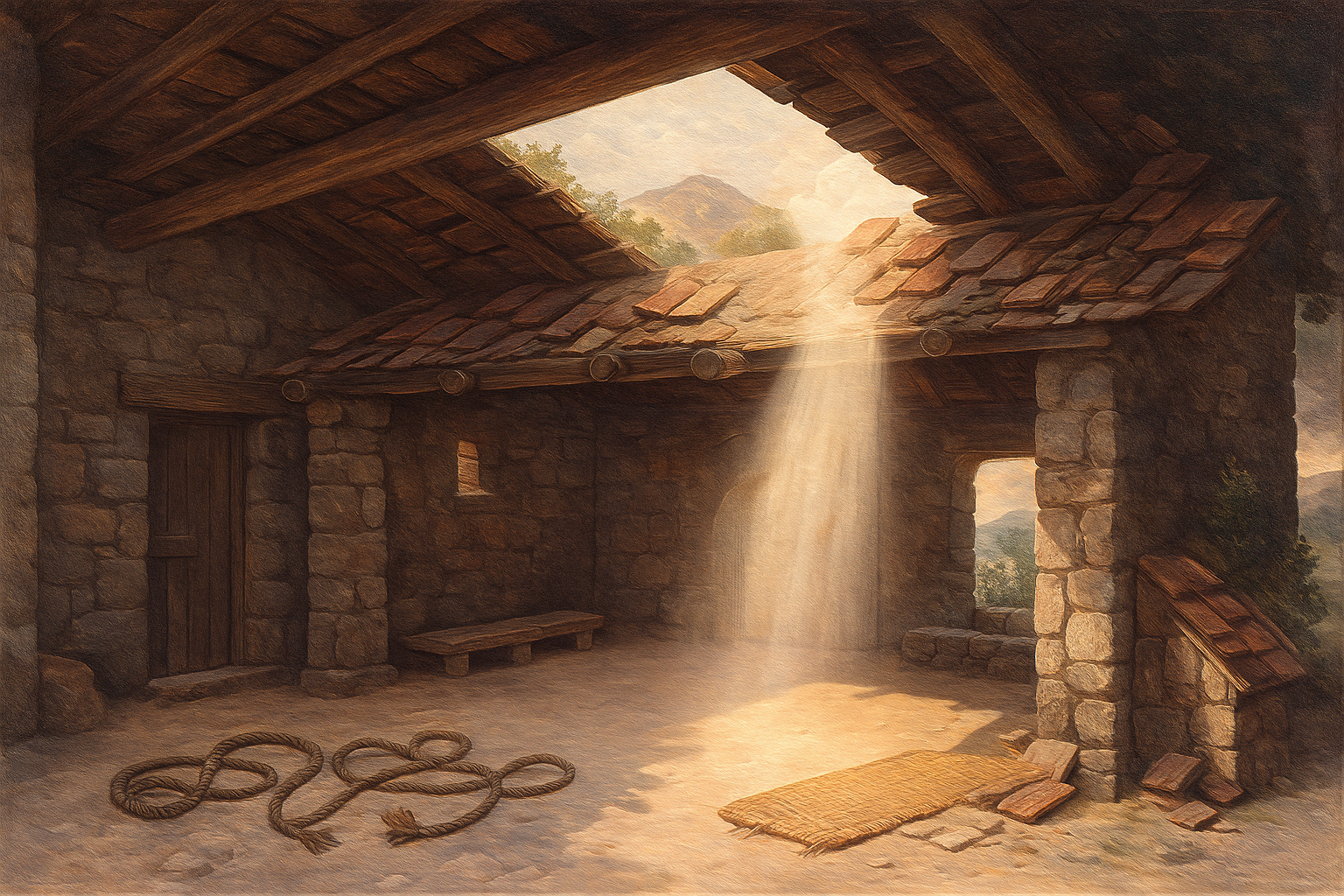
Yet even in that low place, God’s mercy is not absent. As Samson grinds grain in prison, a quiet detail is offered—his hair begins to grow again (Judges 16:22). The Philistines, convinced they’ve won, bring him out for their amusement during a festival. Blind and broken, he asks the servant to guide his hands to the temple pillars and in one final moment of surrender, he prays, “Lord, remember me… strengthen me just once more” (Judges 16:28). God hears, the pillars collapse and the temple falls. In death, Samson brings more deliverance than he had during all his years as judge.
Samson’s death is not simply a tragic conclusion—it is a powerful revelation of mercy. When the mission appeared lost, God restored the one who returned to Him.
This kind of spiritual blindness—one that builds slowly and justifies risk in the name of love, pain, or loneliness—is still with us. When we grow numb to conviction, we often continue moving, relying on yesterday’s strength while today’s Spirit has long grown quiet. But God, in His mercy, can take even failure and turn it into the ground for redemption. Restoration doesn’t begin with recovery—it begins with repentance as we see in Samson’s final victory.
We are reminded in Scripture to stay watchful—not to grow overly confident or assume we’re above falling (1 Corinthians 10:12). We’re also reminded that God’s strength meets us precisely where our strength runs out (2 Corinthians 12:9). Like Samson, our true power doesn’t come from what we hold onto, but from the God who hears us when we finally cry out—for help, for mercy, and for another chance to walk in His purpose.
Blindly Idolatrous (Judges 17)
The tone of the narrative takes a quieter turn in Judges 17. We meet Micah, a man from the hill country of Ephraim, whose spiritual confusion mirrors the broader chaos of his time. The chapter opens with a stolen sum of silver—eleven hundred shekels taken from his mother. When Micah confesses and returns it, she blesses him in the name of the Lord and claims to dedicate the silver to God. But what follows is far from true worship.
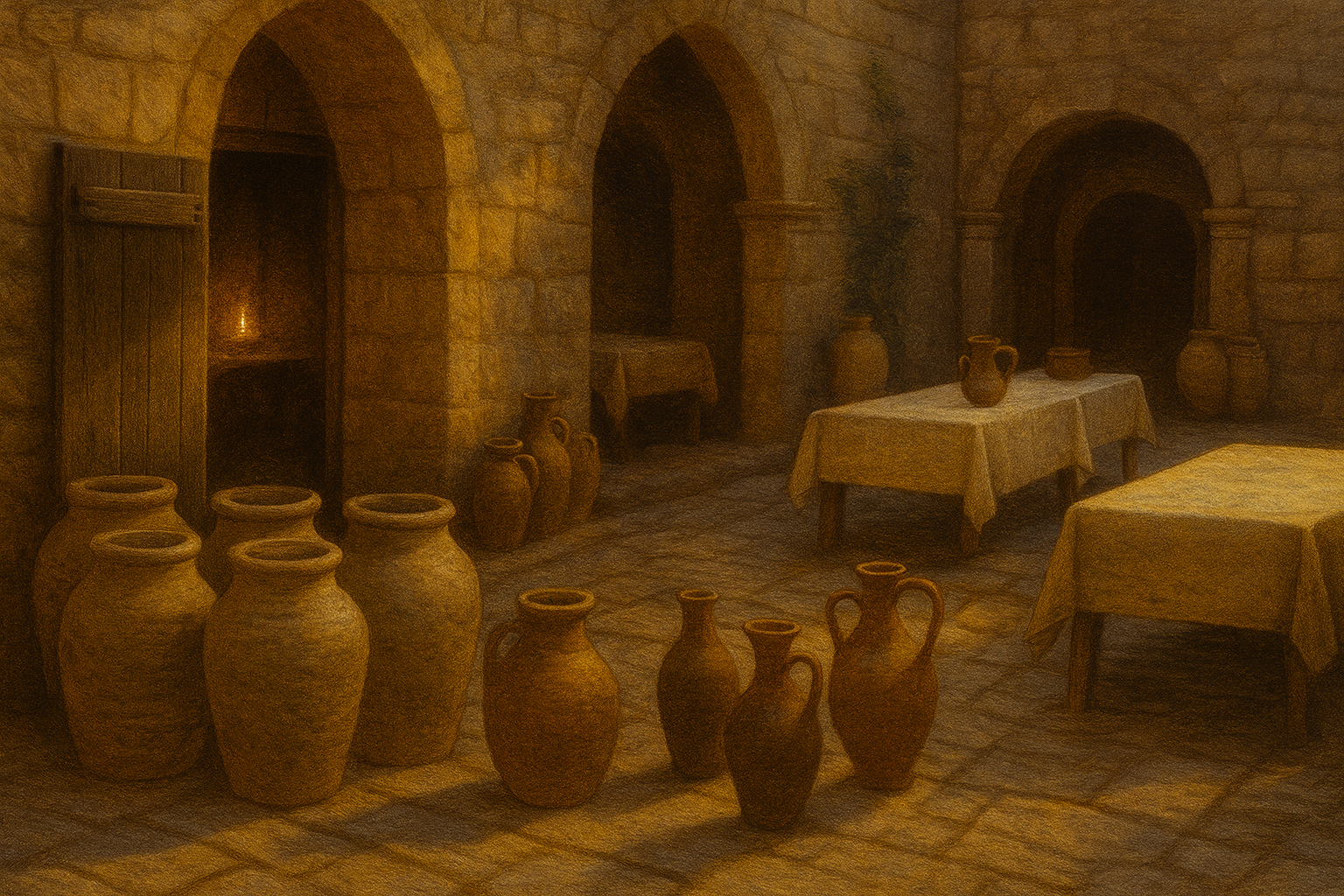
Instead of offering the silver at Shiloh or seeking the counsel of a priest of the Lord, Micah’s mother commissions an idol. In response, Micah constructs a shrine, installs the image, and appoints his own son as priest. Some time later, a young Levite from Bethlehem passes through, and Micah sees an opportunity. He offers the Levite a comfortable arrangement—ten shekels a year, clothing, and food—and the Levite agrees. Micah is elated. “Now I know the Lord will bless me,” he says, “because I have a Levite as my priest” (Judges 17:13).
On the surface, everything appears religious. The language is spiritual. The structure seems intentional. Yet underneath it all is a carefully curated version of worship—one that centers on personal convenience rather than covenant. Micah speaks of the Lord, but he is crafting something that serves him. He blends what is sacred with what is self-serving, borrowing God’s name while building a version of faith he can manage.
This kind of spiritual blindness doesn’t reject God outright—it attempts to redefine Him. It attempts to reshape the holy into something familiar and accessible, something that fits comfortably within the boundaries of personal preference. Micah likely didn’t believe he was rebelling. In his mind, he was pursuing blessing—just on his own terms.
That same tendency is alive and well today. In a world where truth is often personalized and conviction is softened to preserve comfort, it becomes easy to construct a faith that affirms more than it transforms. We gather teachings that reinforce our desires. We filter out what challenges us. And before long, worship becomes more about the atmosphere than about surrender.
Jesus said that true worship must be grounded in both spirit and truth (John 4:24). Paul warns that when we exchange the truth of God for something more tangible or agreeable, we begin to worship what we’ve made rather than the One who made us (Romans 1:25). And when we settle for idols, we risk hollowing out the very life God desires to pour into us.
Blindly Drifting (Judges 18)
The final chapter in this sequence shifts the focus from individuals to a broader, collective drift. The tribe of Dan, still unsettled in their inheritance, sends out five men to scout new territory. Though they had been allotted land in earlier generations, they had failed to fully possess it. Now, rather than returning to fight for what God had already given, they choose to search for an easier alternative.
Their journey brings them to Micah’s house, where they recognize the voice of the Levite. Curious, they ask whether their expedition will be successful. Without true authority or discernment, the Levite offers a quick reassurance—words that carry the appearance of divine blessing but lack the substance. The spies return with confidence, describing Laish as a peaceful, prosperous city, vulnerable and unguarded.
Soon, six hundred armed Danites make their move. On the way, they stop again at Micah’s home, not for hospitality this time, but for plunder. They seize the household idols, the ephod, and the Levite himself. When Micah confronts them in protest, they dismiss him without a second thought. “What’s the matter with you?” they ask with mocking indifference, before continuing on their way (Judges 18:23–24).
When they arrive at Laish, they strike swiftly and without warning. They burn the city, rebuild it, and rename it Dan. The stolen idol is installed as the centerpiece of their new settlement. The chapter ends with a quiet but sobering indictment: “They continued to use the idol Micah had made, all the time the house of God was in Shiloh” (Judges 18:31).
The weight of this moment is not found in the idol alone, but in what they chose to leave behind. God’s presence was still available. His dwelling was still in Shiloh. Yet the tribe of Dan walked away from the place of covenant and constructed something easier—something controllable, something culturally affirming, but ultimately counterfeit. They didn’t just exchange locations. They exchanged inheritance for imitation.
That kind of spiritual drift is not locked in ancient history. It’s alive today in subtle ways. When the Church—when we—begin to chase success apart from God’s presence, we risk building ministries, platforms, or lifestyles that appear fruitful but lack the fire of consecration. Faith becomes functional instead of prophetic and the blessing becomes something we measure, not something we receive.
The writer of Hebrews calls us to remain anchored in the truth we’ve received, so we do not slowly drift away (Hebrews 2:1). Jesus, too, invites us to abide in Him—not in theory, but in dependence, relationship, and enduring trust (John 15:4). Disconnection doesn’t always begin with rebellion. Often, it begins with a practical shortcut—a decision to reach for what seems to work instead of returning to what’s holy.
Reflection
The thread running through Judges 16–18 is not only about failure or idolatry—it’s about sight or the lack of it. Each chapter reveals a different kind of blindness. Samson, strong and divinely chosen, slowly loses his sensitivity to deception until it costs him everything. Micah, earnest yet misaligned, reshapes worship around his personal preferences. And the tribe of Dan, tired of resistance and ready for something easier, walks away from God’s presence while still using His name.
Scripture doesn’t leave us to wander in dim light. We are warned not to lean on our own understanding (Proverbs 3:5), and we are called to walk in the light as He is in the light (1 John 1:7). The Word of God does more than inform—it reveals, corrects, and restores and the Spirit of God doesn’t only convict—He clarifies and leads us back when we’ve drifted.
Samson’s story doesn’t close in defeat—it finds its meaning in surrender.
Micah’s confusion stands as a quiet warning against reducing what is holy into something merely convenient and comfortable.
The tribe of Dan also reveals how easy it is to build something that appears successful on the outside while lacking the presence of God at its core.
Each chapter draws us back to the One who restores sight, reclaims true worship, and continually invites His people to return.
May we be a people who see—not because we’ve figured everything out, but because we’ve chosen to stay close to the Shepherd, who patiently pursues and faithfully leads!
Prayer
Lord, open my eyes to the ways I’ve grown comfortable with confusion. Expose the places where I’ve shaped You to fit my life, rather than shaping my life to honor You. If I’ve drifted, draw me back. If I’ve compromised, restore my consecration. Give me discernment in a culture of deception and courage to follow You even when the way is costly. Let my worship be real, my heart be soft, and my faith remain anchored in Your truth.
In Jesus’ name,
Amen.
Our Scripture reading schedule for the rest of the week:
| Day | Date | Scripture Reading |
|---|---|---|
| Sunday | April 6 | Judges 19-21 |
In Christ,
Mrs. O 🤍



Leave a Reply