
Scripture Reading: Judges 6–7
Some battles don’t arrive with a clear front line. They slip in like a code—complex, layered, and hard to decipher. The signs of war aren’t always obvious and oppression doesn’t always come with swords. Sometimes, it hides in stolen harvests and shattered confidence. Sometimes, it sounds like silence from heaven. It looks like a people who once walked through parted seas but now crouch in fear, unsure of how they got here or how to move forward. The rhythm is off. The pattern is lost. It’s as if the whole land is caught in a spiritual system that no one remembers how to unlock.
And then—God speaks!
He doesn’t shout from the mountaintop. He leans into the shadows and calls out to a man in hiding. Gideon, tucked away in a winepress, threshing wheat in secret, doesn’t look like a soldier. He looks like a survivor. But heaven sees more. Heaven sees the man who will rise—not by his own brilliance, but by God’s empowering hand—as a divine codebreaker.
Because that’s what Gideon becomes: a man equipped by God to discern the root issues behind enemy strongholds. The true threat wasn’t just Midian’s might. It was what Israel had allowed to linger—idols at home, fear unchecked, and trust misplaced. Gideon’s mission wasn’t simply to swing a sword. It was to first decode the spiritual disorder—to see the hidden systems that had numbed Israel’s faith—and to obey God’s instructions to dismantle them, one step at a time.
However, before he could command an army, he had to tear down his father’s altar. Before he could hear victory shouts, he had to listen for divine signs—fire on a rock, dew on fleece, and a barley loaf in a dream. With each encounter, God was not only revealing strategy; He was forming a man who would follow that strategy.
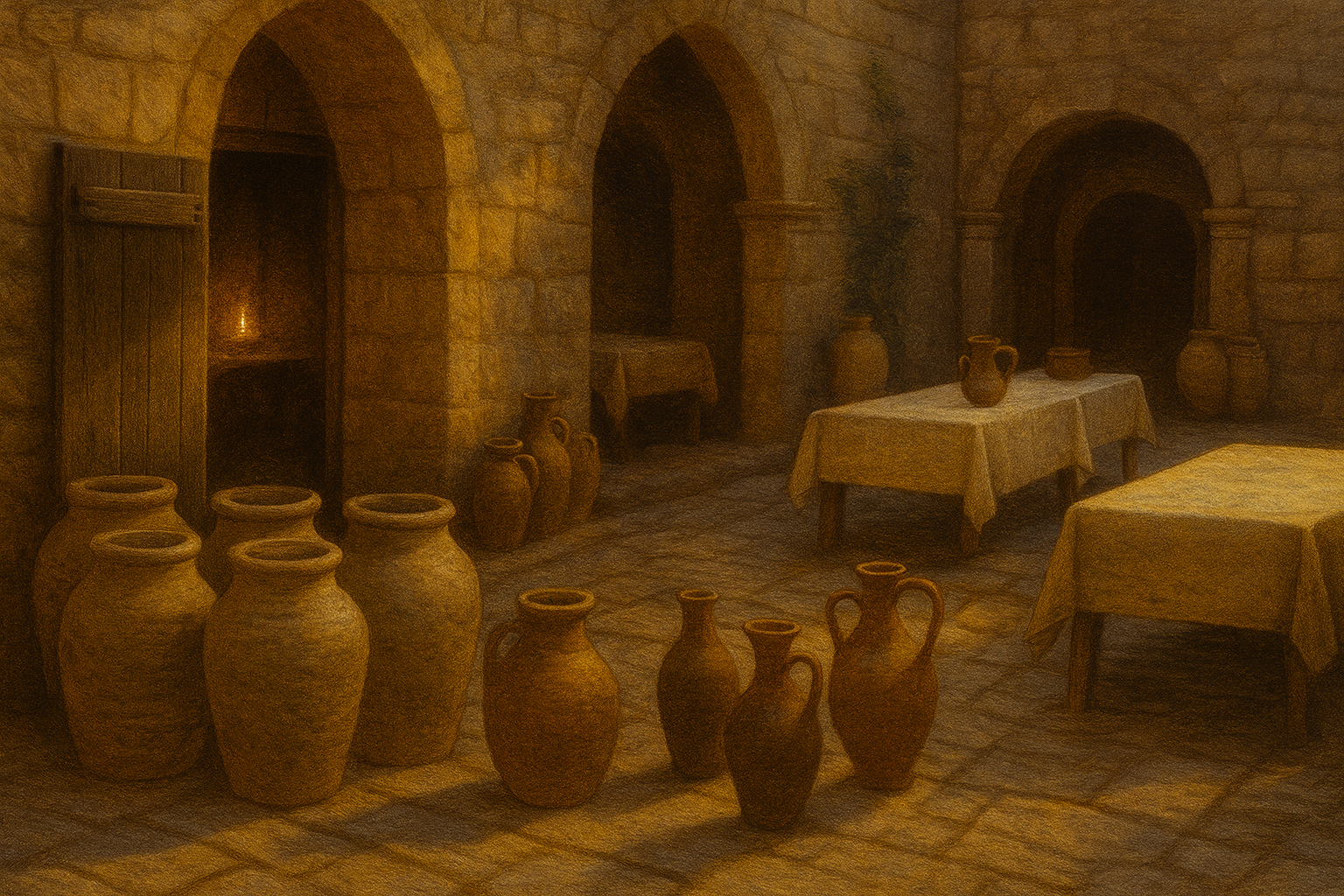
And when the battle finally came, God didn’t give Gideon more manpower—He reduced it. He didn’t hand him better weapons—He gave him jars, torches, and trumpets. This wasn’t just a military win. It was a masterclass in spiritual warfare. The real breakthrough came not through strength, but through discernment, surrender, and radical obedience to the God who sees what the enemy tries to hide. “Not by might nor by power, but by My Spirit,” says the Lord Almighty (Zechariah 4:6).
That is still how God works!
He is still raising up codebreakers—ordinary people empowered with divine wisdom to expose lies, dismantle fear, and walk in Spirit-led strategy. He still invites us to listen before we leap, to worship before we war, and to trust that His presence is the pattern that unlocks every chain. We don’t need to know everything. We just need to be willing. And step by step, as we follow His voice, the codes begin to break, and the strongholds fall.
Recruitment (Judges 6)
Long before swords are drawn and trumpets sound, the Lord begins with a whisper. Not in public. Not on a mountaintop. But in a winepress—where wheat is being threshed in secret, where fear has driven boldness underground, and where survival has replaced strength.
Gideon never intended to be a warrior. At least not by his own admission. He considered himself the least of his family, from the weakest clan in Manasseh (Judges 6:15). Yet it is there, in that quiet place of hidden labor, that the angel of the Lord appears—not with judgment, but with a declaration that defies everything Gideon believes about himself. “The Lord is with you, mighty warrior” (Judges 6:12). Heaven saw what Gideon could not yet imagine.
What follows is not a transformation on the spot, but a slow unraveling of the fears that had buried Gideon’s faith. He responds with honest questions: “If the Lord is with us, why has all this happened?” (Judges 6:13). Yet God doesn’t rebuke the questions. Instead, He commissions Gideon right in the middle of his uncertainty: “Go in the strength you have… Am I not sending you?” (Judges 6:14). God wasn’t waiting for perfection. He was inviting obedience.
God then begins building Gideon’s trust brick by brick: fire rising from a rock to consume his offering (Judges 6:21), the altar he names The Lord is Peace (Judges 6:24), and the fleece—wet, then dry—as signs of divine reassurance (Judges 6:36–40). Yet the real codebreaking begins not on the battlefield, but in Gideon’s own backyard. God calls him to tear down his father’s altar to Baal and cut down the Asherah pole beside it (Judges 6:25–27). Obedience starts at home, in the hidden places where compromise has quietly taken root.
Even now, God often starts where no one else is looking—in our private wrestling, our reluctant prayers, our small acts of obedience. Like Gideon, we may feel overshadowed or underqualified, but God is not asking us to supply the strength—only to trust the One who does. “His power is made perfect in weakness” (2 Corinthians 12:9), and when we say yes to His voice, even in fear, we begin walking in the power of divine purpose!
Decipherment (Judges 7)
If Judges 6 revealed how God cultivates courage in obscurity, Judges 7 shows how He wins battles through surrender. Now on the edge of war, Gideon stands with 32,000 men—perhaps enough to feel hopeful. But God sees through the numbers. “You have too many men,” He says (Judges 7:2). Strength, in God’s economy, is never about size. It’s about trust!
One sifting leads to another. The fearful are released. Then, among the remaining ten thousand, only those who drink water a certain way are chosen—just three hundred men in total (Judges 7:5–7). It isn’t arbitrary. It’s surgical. God is removing every reason Gideon could point to and say, “We won because of this.” The field must be cleared so the glory can be His alone.
Still, God doesn’t leave Gideon stranded in fear. With tenderness, He invites him to listen in on the enemy. There, in the quiet of the Midianite camp, Gideon hears a dream—a barley loaf tumbling into a tent—and its interpretation: “God has given the Midianites into his hands” (Judges 7:13–14). It is enough to turn trembling into worship.
Gideon returns ready. The plan is strange: no weapons, just torches in jars, trumpets in hand, and the shout, “A sword for the Lord and for Gideon!” (Judges 7:20). When the jars break and the light bursts forth and panic overtakes the Midianites as they destroy themselves in confusion. Israel’s victory comes not from aggression, but from divine precision.
We often expect victory to look like effort. But in God’s kingdom, it often begins with reduction—with less we can depend on, and more we must entrust to Him. When we are stripped down to worship and willingness, we stand where Gideon stood—with fragile jars in our hands and a fire of heaven burning within. “If God is for us, who can be against us?” (Romans 8:31). We may feel surrounded, but the real power has always belonged to God!
Reflection
Gideon’s story reminds us that God doesn’t call the brave—He makes brave those He calls. He doesn’t wait for our confidence to appear before assigning purpose. Instead, He meets us right where we are—often in hidden places—and offers His Word. He welcomes our honest questions, our hesitations, even our doubts. And yet, He doesn’t leave us there. He gently leads us forward. When we obey with trembling hearts, He strengthens us in ways we never imagined.
We don’t always get the full plan. Sometimes, all we receive is a torch, a trumpet, and a quiet whisper to go. But when we choose to lean into His voice, tear down the altars He reveals, and trust the strategies He gives, we begin to see His hand in motion. The spiritual code begins to break. Fear loosens its grip. What once felt immovable begins to shift—not because we’ve figured it out, but because we’ve walked in obedience.
God isn’t looking for massive armies or flawless warriors. He’s looking for yielded vessels—those willing to obey in the dark, to worship before the victory is visible, and to carry His light into spaces that feel broken and bound. “The people who know their God will be strong and do exploits” (Daniel 11:32, KJV). Strength isn’t manufactured; it’s imparted through intimacy with Him.
When we break our jars—laying down pride, self-reliance, and fear—and let His light shine through, we step into our role as His codebreakers. Not mysterious or elite, but faithful and listening. Through our obedience, He exposes darkness, brings confusion to the enemy’s camp, and leads His people forward in freedom. “For the weapons of our warfare are not of the flesh but have divine power to destroy strongholds” (2 Corinthians 10:4). The battle is His, and the victory, even when unconventional, is assured.
Prayer
Lord,
You are the God who calls the hidden and equips the hesitant. Thank You for seeing what I cannot see in myself. When fear speaks louder than faith, draw me close enough to hear Your strategy. Teach me to obey before I understand, and to trust You even when the steps feel unclear. Remove every false source of strength until all that remains is full reliance on You.
Let my worship rise before the breakthrough, and may my obedience light the way for others. Break the codes in my own heart—every fear, every lie, every hidden altar—and replace them with Your truth. I want to walk in the power of Your Spirit, carrying light and declaring victory, not by my strength but by Yours.
In Jesus’ name,
Amen.
Our Scripture reading schedule for the rest of the week:
| Day | Date | Scripture Reading |
|---|---|---|
| Wednesday | April 2 | Judges 8-9 |
| Thursday | April 3 | Judges 10-12 |
| Friday | April 4 | Judges 13-15 |
| Saturday | April 5 | Judges 16-18 |
| Sunday | April 6 | Judges 19-21 |
In Christ,
Mrs. O 🤍




Leave a Reply