
Scripture Reading: Joshua 9–11
Masks are subtle things. They don’t always look like lies or deceit. Sometimes, they resemble strategy. Other times, they mimic strength. We wear them not only to hide from others—but often, to protect ourselves from exposure, accountability, or the ache of vulnerability.
In the heat of battle or the hush of insecurity, masks become a form of control. But God is never fooled. He sees beyond the surface, beneath the armor, into the hidden motives of the heart. “Man looks at the outward appearance, but the Lord looks at the heart” (1 Samuel 16:7).
In Joshua 9–11, masks appear on every side—disguises worn by outsiders, pretenses rising from fear, and pride cloaked in military might. But one by one, each is removed under the light of God’s truth.
And still today, the same God invites us to drop what we hide behind and trust the power of being fully seen—and fully led.
The Mask of Deception (Joshua 9)
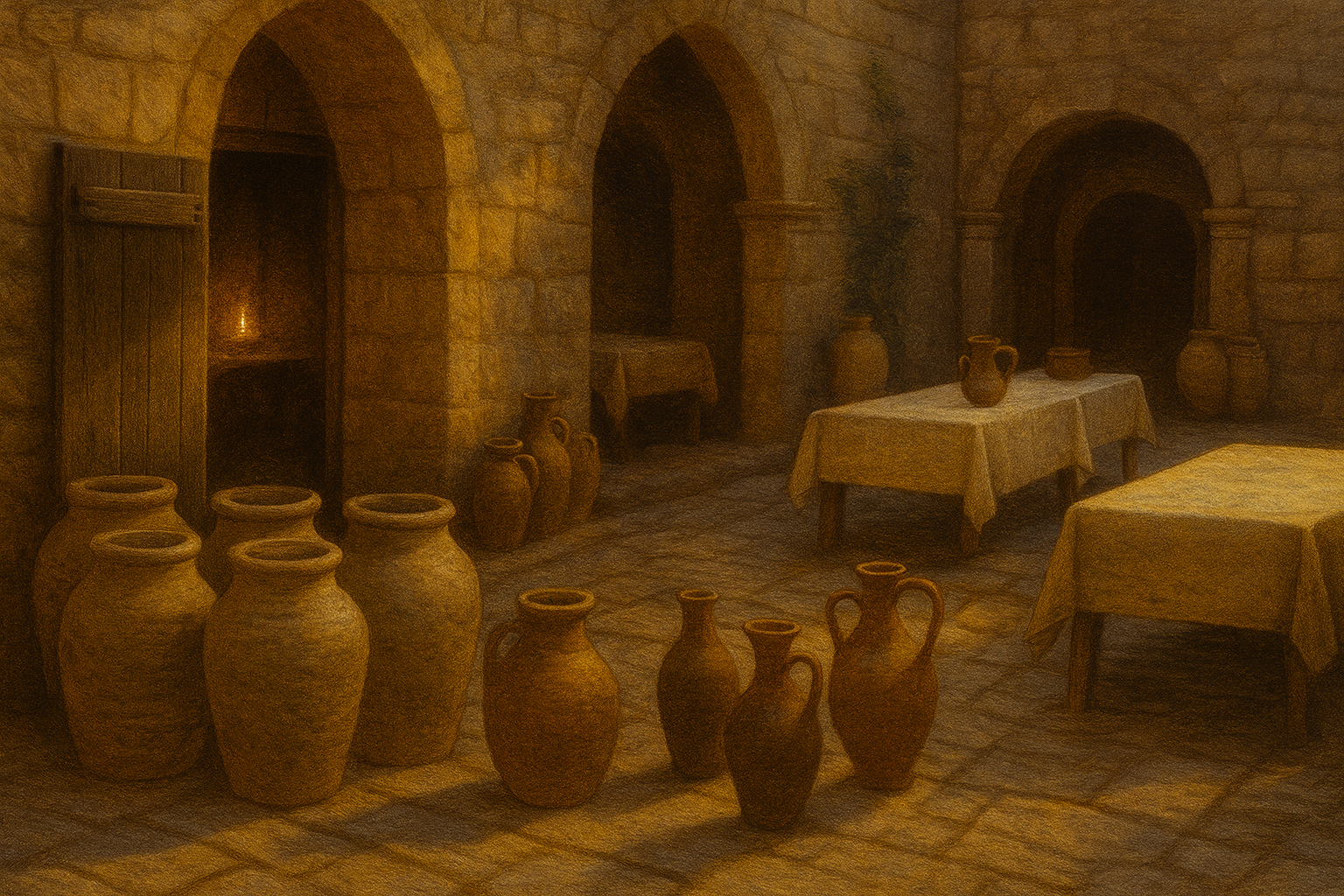
As Israel’s reputation spreads across the land, nations begin to tremble. But not all respond with swords drawn. The people of Gibeon, hearing of Jericho’s fall and Ai’s ruin, craft a different kind of resistance—one stitched in illusion. They disguise themselves with worn-out sandals, cracked wineskins, and stale bread, presenting themselves as weary travelers from a far-off land. Their goal isn’t battle—it’s a treaty.
And it works.
Joshua and the elders examine their appearance and listen to their words, but one crucial detail is missing: “they did not inquire of the Lord” (Joshua 9:14). Deception slips in not through force, but through assumption. A covenant is made. The mask succeeds.
Yet remarkably, God does not annul the agreement. Instead, He honors Israel’s oath and folds the Gibeonites into their service—assigning them to the altar, the very place of divine presence (Joshua 9:27). What was meant as manipulation becomes, by God’s hand, a means of mercy.
This story reminds us how easy it is to make decisions based on what we see, what sounds reasonable, or what others present to us. But spiritual discernment requires more than perception—it requires pause and prayer. The New Testament echoes this wisdom: “Test everything. Hold on to what is good” (1 Thessalonians 5:21).
And even when we misstep, God’s grace is not absent. He can transform even the consequences of deception into divine invitation.
The Mask of Fear (Joshua 10)
While Gibeon approached Israel with deceit, the southern kings gather with defiance. Yet beneath their bold alliance lies something less stable: fear. The treaty between Gibeon and Israel shakes them. Gibeon was strong—if even they had surrendered, what hope remained for the rest?
So five kings join forces, not out of confidence, but desperation. Their attack on Gibeon is both retaliation and a warning. But Israel responds swiftly, and this time, with God’s voice ringing clear: “Do not be afraid… I have delivered them into your hand” (Joshua 10:8).
What follows is not just a military conquest—it is divine spectacle. As Joshua leads his army uphill through the night, God throws the enemy into confusion. Then comes the hailstorm—hail that kills more than swords ever could (Joshua 10:11). And then, in a moment that silences time itself, Joshua asks the sun to stand still… and it does.
This chapter unveils a striking reversal. While the kings hide behind fear disguised as power, Joshua, who once trembled at his call, now moves with unshakable trust. He doesn’t retreat—he prays for the impossible. And heaven answers.
“The prayer of a righteous person is powerful and effective” (James 5:16). Joshua’s boldness wasn’t rooted in ego but in alignment with God’s will. His faith pierced the illusion of fear and invited divine intervention.
We, too, are invited to uncover our own masks of fear—not to deny that it exists, but to surrender it to the God who commands time, storm, and victory.
The Mask of Pride (Joshua 11)
By the time we reach chapter 11, word of Israel’s victories has spread throughout Canaan. One might expect the remaining kings to consider peace or at least hesitate. But instead, Jabin king of Hazor gathers an even greater alliance. The army is vast, their numbers compared to the sand on the seashore. Their chariots gleam, their confidence unshaken.
But beneath the scale and spectacle lies the final mask: pride.
Unlike the Gibeonites’ deception or the Amorites’ fear, this coalition clings to the illusion of invincibility. They trust in their strength, their weapons, their numbers. But God sees through their posturing and assures Joshua once again: “Do not be afraid of them… I will give them all into your hands” (Joshua 11:6).
The battle is swift. The strongholds fall. The chariots are burned. And pride is crushed under the weight of divine justice.
The danger of pride lies in its subtlety. It doesn’t always roar—it often whispers. It dresses up as strategy, self-confidence, or independence. But Scripture speaks plainly: “God opposes the proud but gives grace to the humble” (James 4:6). And in this chapter, His opposition is unmistakable.
Israel’s campaign ends not in a spirit of self-congratulation, but in the quiet stillness of divine fulfillment. “Then the land had rest from war” (Joshua 11:23). And that rest came not by human strategy or strength, but through humble submission to God’s command.
Even now, He calls us to unmask our pride—not to shame us, but to lead us into His rest.
Reflection
These chapters hold more than battle records. They are heart exposures. In each masked encounter, God does not merely respond to the situation—He reveals something eternal about Himself.
To the deceivers of Gibeon, He extends mercy and reassigns them to holy service. To the fear-driven kings of the south, He reveals power that cannot be matched. To the prideful coalition in the north, He brings swift defeat and sovereign peace.
He does the same for us.
“Nothing in all creation is hidden from God’s sight. Everything is uncovered and laid bare before the eyes of Him to whom we must give account” (Hebrews 4:13). And yet, what He sees, He loves. What He exposes, He restores.
In Jesus, we meet the same discerning, compassionate gaze. He saw through the fig leaves of Eden, the fig tree of Israel, and the Pharisees’ polished appearances. And He still sees through us—not to condemn, but to cleanse. “If we walk in the light as He is in the light… the blood of Jesus purifies us from all sin” (1 John 1:7).
So let the mask fall. Let pride break, fear release, and deception dissolve under the weight of truth. There is no safer place to be uncovered than in the hands of the One who wove you together.
Prayer
Lord, peel away every mask I wear—whether it’s the cloak of self-reliance, the shield of fear, or the illusion of pride. Help me walk in truth, unhidden and unashamed. Teach me to pray bold prayers, trust Your justice, and rest in Your mercy. Let every layer fall away until only You remain.
In Jesus’ name,
Amen.
Our Scripture reading schedule for the rest of the week:
| Day | Date | Scripture Reading |
| Wednesday | March 26 | Joshua 12–15 |
| Thursday | March 27 | Joshua 16–18 |
| Friday | March 28 | Joshua 19–21 |
| Saturday | March 29 | Joshua 22–24 |
| Sunday | March 30 | Judges 1–2 |
In Christ,
Mrs. O 🤍



Leave a Reply